Research
At the SCoPe Lab, we utilize a range of empirical methods to collect behavioral and physiological sensory data, including eye-tracking, electrodermal activity (EDA), and electroencephalography (EEG), in both real-world and virtual environments (i.e., AR and VR). This approach allows us to understand how people perceive and interact with physical and built spaces and to inform the design of tools and environments that support effective navigation and spatial learning, decision-making, and well-being.
The SCoPe Lab research activities are currently centred around these major projects:
- Investigating the influence of in-car navigation systems on drivers' distraction and inattention and neurocognitive responses (find out more here).
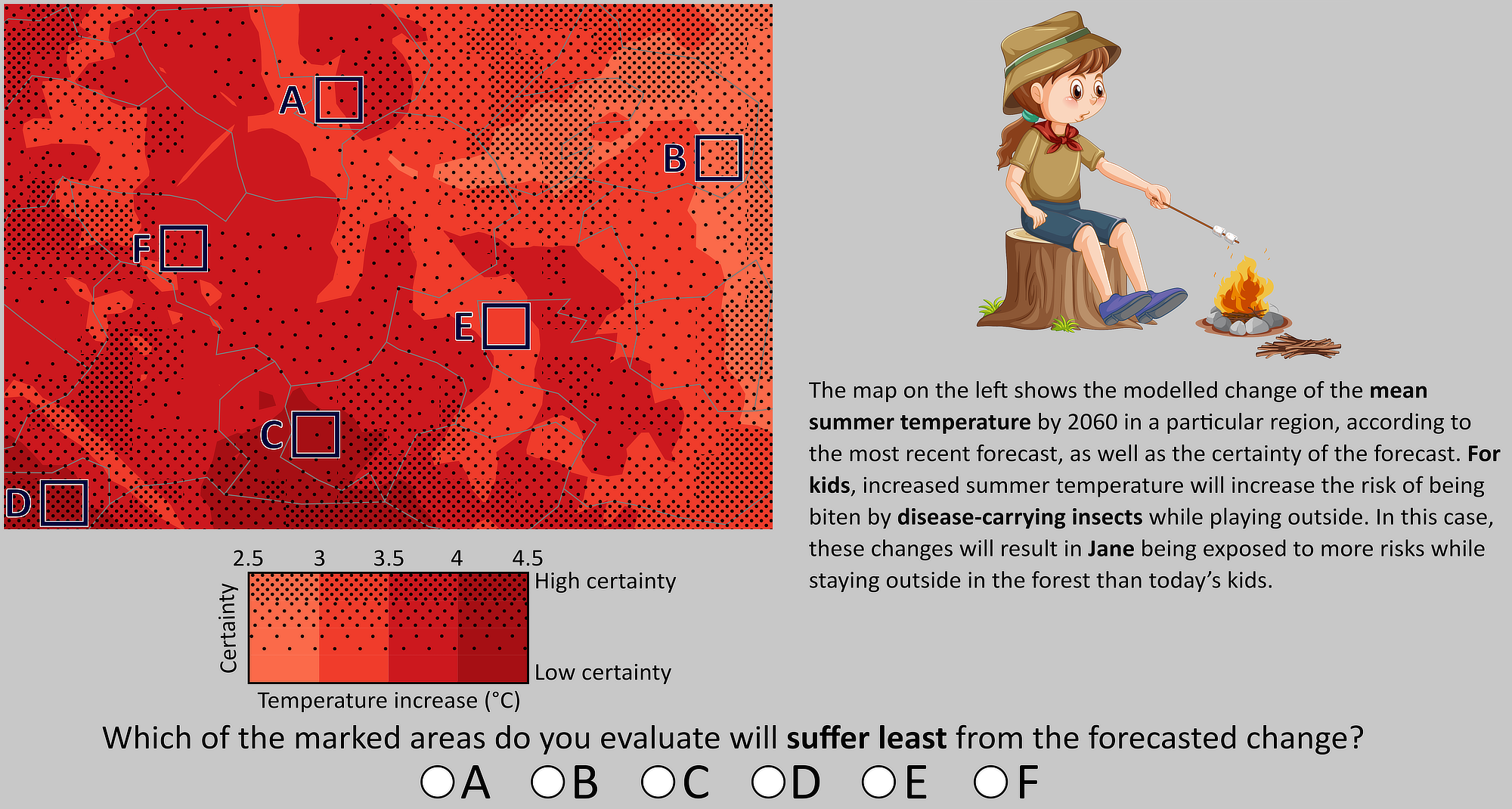
- Communicating climate change uncertainty in VR environments. Climate change skepticism, emotional responses, and their effects on visualization’s trust and interpretation (PhD project: Sergio Bazzurri).
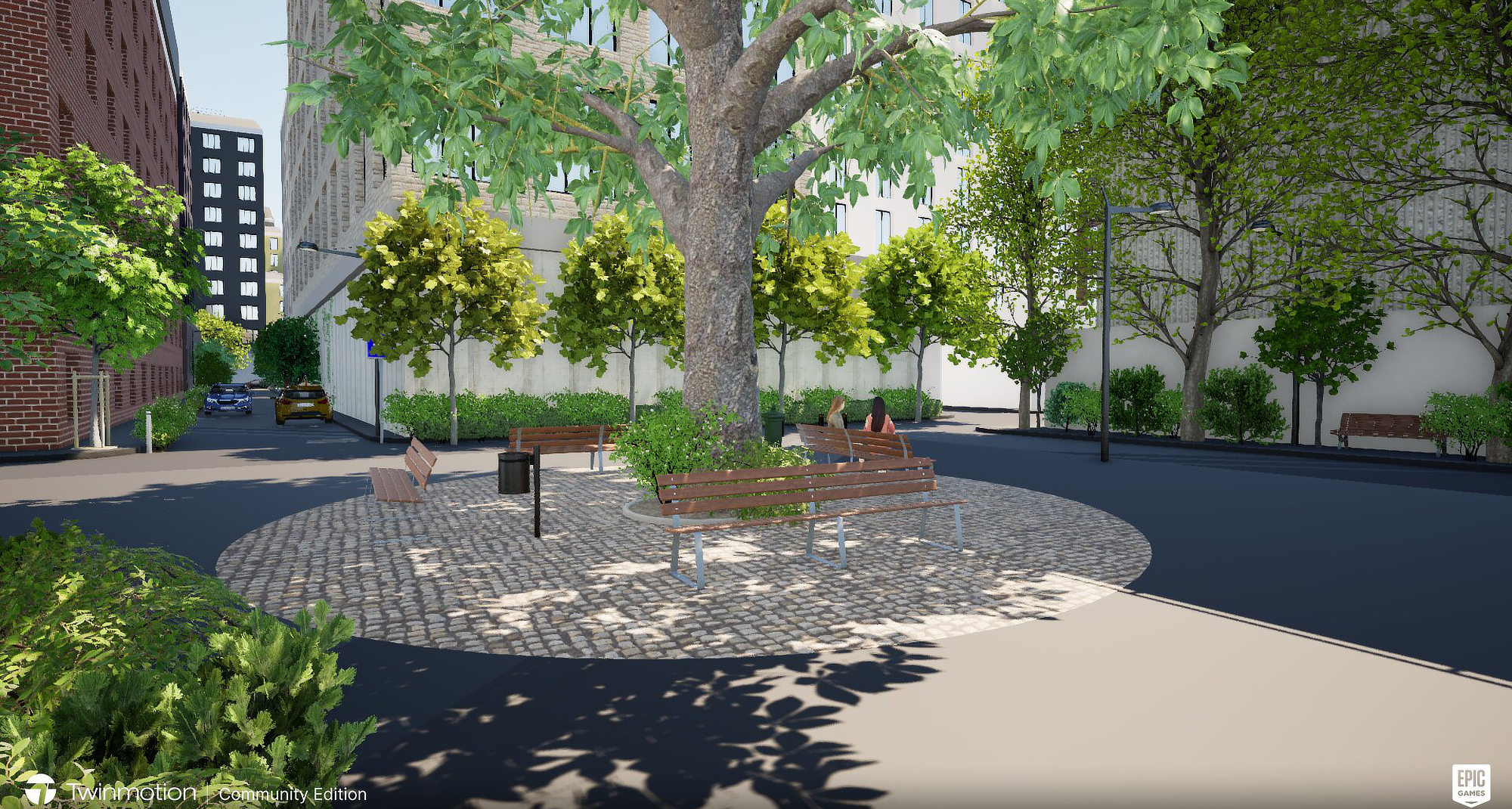
- Map-assisted wayfinding in virtual urban environments: How does landmark visualization and environmental familiarity shape spatial learning (PhD project: Jiaona Hu).




Featured publications:
- Belde, D., Kapaj, A., Fabrikant, S. I., Reichenbacher, T., Frauenfelder, T., Nguyen-Kim, T. D. L., ... & Niemann, T. (2026). The Impact of AI on Eye Gaze Patterns in Chest X-Ray Interpretation: An Eye Tracking Study of Novice and Expert Radiologists. Investigative Radiology, 10-1097. https://doi.org/10.1097/rli.0000000000001289
- Bartling, M., Kapaj, A., Cheng, B., Xu, Z., Griffin, A. L., & Fabrikant, S. I. (2026). Unlocking context-aware mobile map adaptation: a VR navigation user study. Cartography and Geographic Information Science, 53 (1), 56–74. https://doi.org/10.1080/15230406.2025.2512075
- Hilton, C., Kapaj, A. & Fabrikant, S.I. Fixation-related potentials during mobile map assisted navigation in the real world: The effect of landmark visualization style. Attention, Perception, & Psychophysics, 87, 191–206(2025). https://doi.org/10.3758/s13414-024-02864-z
- Kapaj, A., Hilton, C., Lanini-Maggi, S., & Fabrikant, S. I.(2024). The influence of landmark visualization style on task performance, visual attention, and spatial learning in a real-world navigation task. Spatial Cognition & Computation, 24(4), 227–267. https://doi.org/10.1080/13875868.2024.2328099
- Hilton, C., Kapaj, A., & Fabrikant, S. I. (2023). Landmark sequence learning from real-world route navigation and the impact of navigation aid visualisation style. Journal of Cognition, 6(1), 41. https://doi.org/10.5334/joc.307
- Kapaj, A., Lanini-Maggi, S., Hilton, C., Cheng, B., &Fabrikant, S. I. (2023). How does the design of landmarks on a mobile map influence wayfinding experts’ spatial learning during a real-world navigation task? Cartography and Geographic Information Science, 50(2), 197–213. https://doi.org/10.1080/15230406.2023.2183525
The full list of publications from all SCoPe Lab members can be found here.