Inclusive housing retrofit and repair: Thinking across marginalised sites
On May 7th and 8th, 2026, Lund University’s Centre for Sustainability Studies (LUCSUS) in collaboration with the University of Zurich and London University College hosted the workshop Inclusive housing retrofit and repair: Learning with marginalized neighborhoods for just climate outcomes.
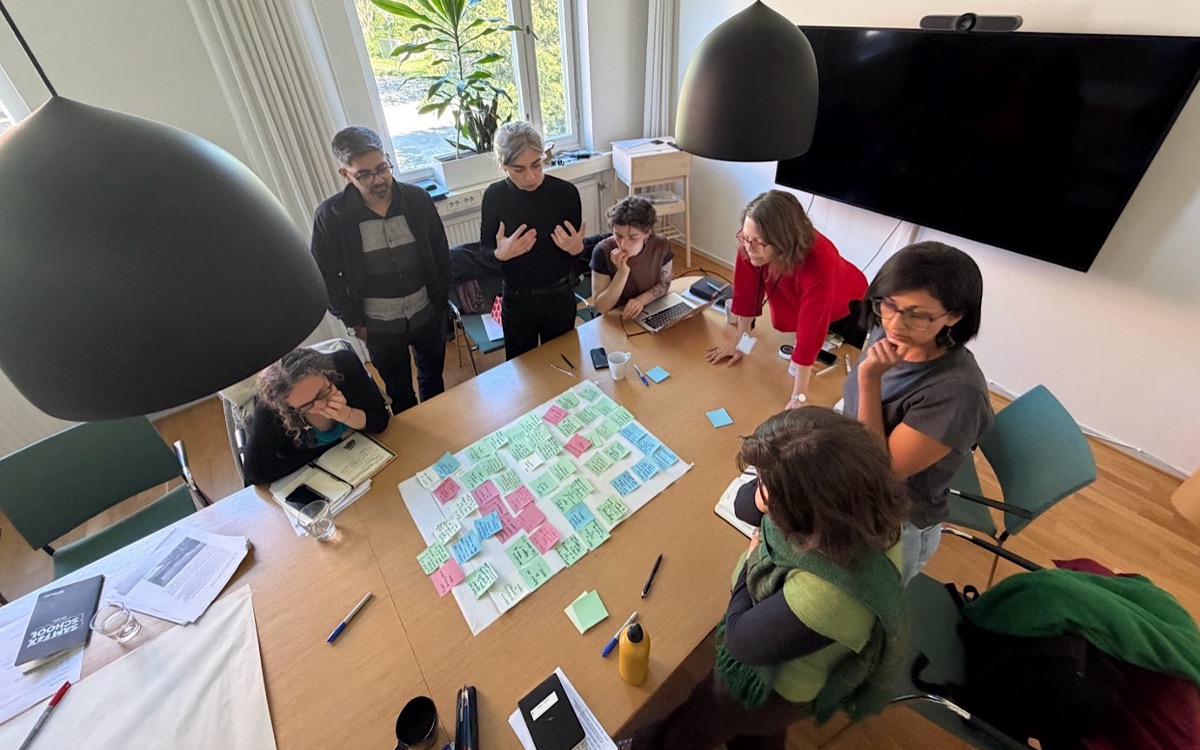
With nearly 40% of global carbon emissions attributed to real estate, urban climate strategies increasingly include interventions in the housing stock. These efforts have focused on retrofitting existing buildings as well as on constructing sustainable, climate-adapted housing. Yet, while such formal urban development is expanding globally, climate action in informal settlements, squats or other marginalised sites is frequently excluded from official plans, despite climate action being especially urgent in densely populated neighbourhoods. On May 7th and 8th, 2026, Lund University’s Centre for Sustainability Studies (LUCSUS) in collaboration with the University of Zurich and London University College hosted the workshop Inclusive housing retrofit and repair: Learning with marginalized neighbourhoods for just climate outcomes. Funded by Lund University and the University of Zurich’s Global Seed Fund and organized by Melissa García Lamarca, Hanna Hilbrandt and Tatiana Thieme, the event brought together ten scholars from around the globe to ask key questions about sites that are frequently excluded from current climate-adapted housing considerations: How do local knowledges shape forms of making home and repair in underserved neighbourhoods? How can research connect this knowledge and practice of retrofit and repair to an ethics of care? How do these practices widen our understanding of climate mitigation and adaptation in cities? How do these forms of learning (dis)connect to wider climate mitigation discourses and just transitions in cities?
The discussion gathered different areas of expertise ranging from architecture and urban planning to sustainability studies, tenure law, and human geography and build on case studies conducted, amongst others, in India, Bangladesh, Brazil, South Africa, Mexico, Spain, Kenya, and Chile. Retrofit and repair were defined as means and catalysts of change. As concepts, they provided a generative framework to think with both bottom-up and top-down examples, and human and more-than-human actors. Formed around conditions of desire and urgency, the collective analysed diverse practices of repair to critically evaluate the conditions caused in the past, upholding a transformative approach towards the present, and keeping a generative outlook towards the future. The ethos of repair that was articulated throughout the workshop was inherently political as well as propositional, calling for both critical engagement with underlying power structures AND hopeful imaginaries in any discussion of repair.
Photocredit: Tatiana A. Thieme