PhD Defense Aline Bornand
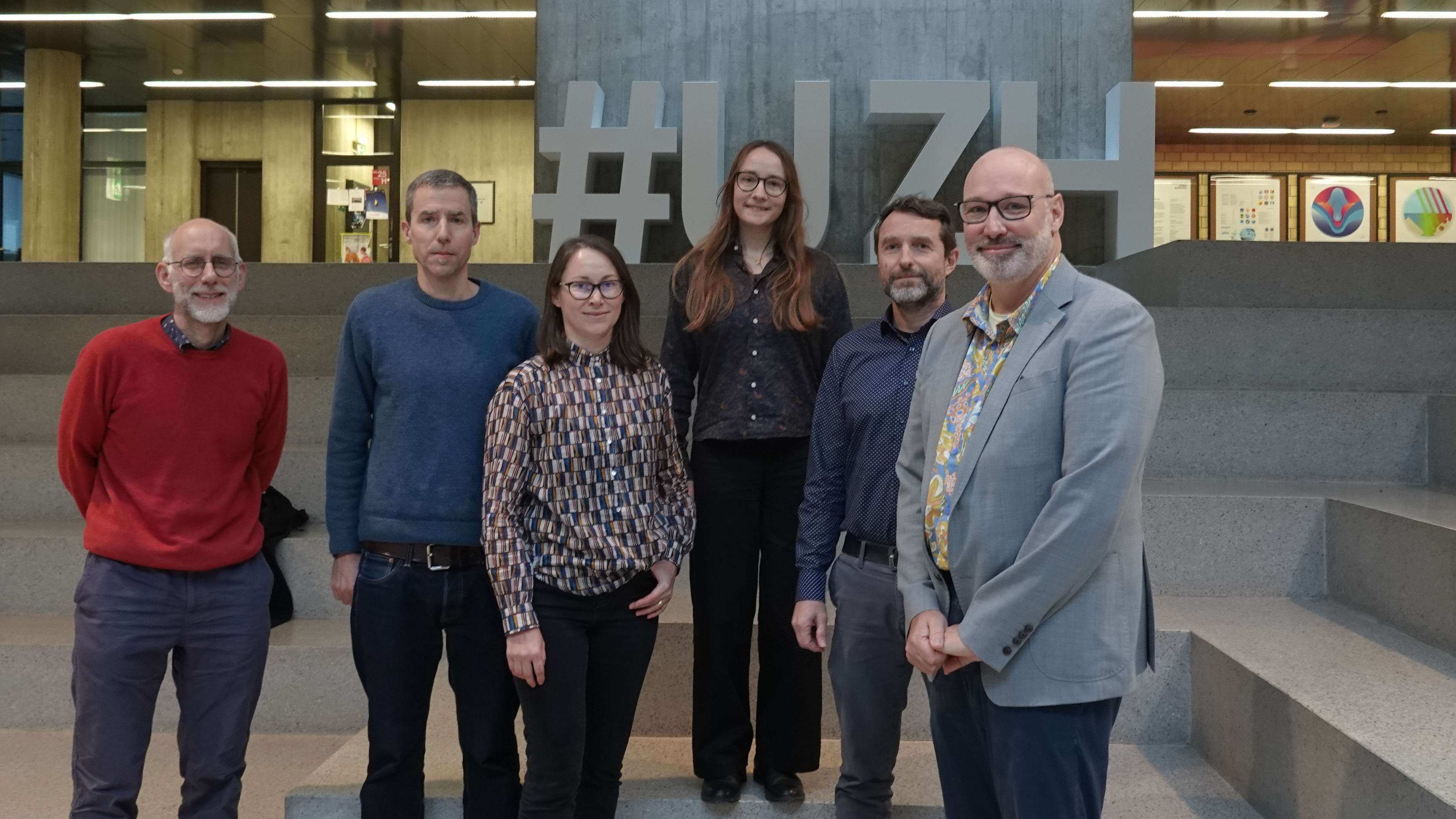
How can we improve the measurement of tree volume using terrestrial laser scanning and deep learning? This is the question Aline Bornand adressed in her PhD thesis.
Individual tree volume is an important metric for ecosystem monitoring. In this context, terrestrial laser scanning (TLS) can help avoiding destructive sampling methods and are an interesting complement to traditional allometry-based approaches. In fact, TLS makes it possible to gather detailed 3D point cloud data for tree volume estimates without causing damage. However, occlusion in dense forest canopies often causes incomplete point clouds and can introduce errors in derived tree volumes. To address this issue Aline Bornand explored in her dissertation if deep learning (DL) can help improving the accuracy and completing TLS-based point clouds.
As a first step, she compared TLS-derived biomass estimates with a unique reference data set. Her findings showed that TLS-based models can achieve similar accuracies to traditional allometries for stem volume. However, challenges like occlusion still limit the accuracy of the data, especially in the crown. Aline then investigated how DL can help fill these data gaps. She trained DL-models on synthetic and real TLS data. These models successfully filled in gaps in point clouds and helped reconstructing outer crown shapes. They also helped to improve tree height estimates and provided additional proxies to describe the crown geometry.
Her work highlights the potential of TLS and DL for forest inventories, especially as mobile laser scanning and benchmark datasets will become more widely available.
Congratulations on your successful PhD defense, Aline!